

There used to be a group chat that was actually active. Group trips, inside jokes everyone understood, a shared identity as "the friend group." At some point without any specific falling-out that changed. The group chat goes silent for weeks. Yet, you still talk to each of them individually; you just don't talk to everyone at once anymore. It’s easy to view this as a failure of the friend group. In reality, however, it is often just friendship taking a completely normal course.
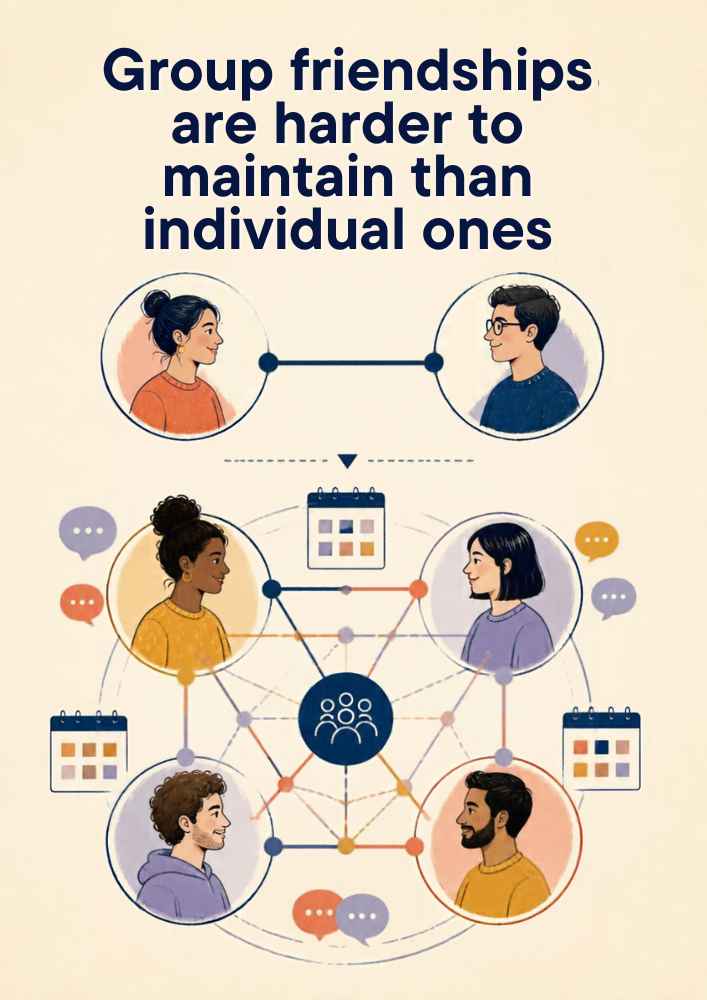
Group friendships are harder to maintain than individual ones
A friend group requires something a one-on-one friendship doesn't: that everyone’s schedules, interests, and life stages remain more or less aligned. Two people can stay close with relatively little coordination. For five people to maintain that same group closeness requires far more synchronization, and life tends to slowly disrupt that alignment different jobs, different paces in relationships, different cities without it being anyone's fault.
That is why group closeness is often the first thing to fade; not because the individual friendships within the group have weakened, but because the coordination needed for the whole group to function as a unit becomes harder to sustain.
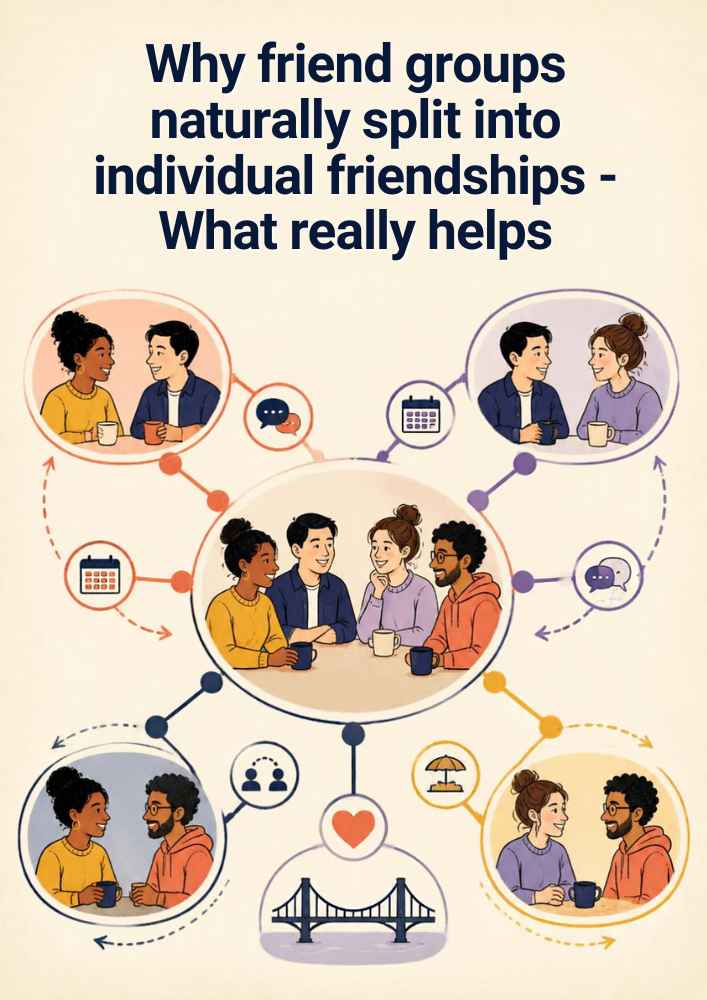

Individual friendships often outlast the dissolution of the group
Here is a detail that is easy to overlook while it’s happening: a group dissolving doesn't necessarily mean the friendships have vanished. It is very common for a group of five friends to slowly evolve into two or three close, independent friendships each maintained on its own while the "all-together" dynamic quietly shifts from the norm to something rare or occasional.
If you still feel genuinely close to each person individually, the friend group hasn't failed; It has simply changed in structure, shifting from one large connection to several smaller and often deeper ones.
Why this can feel like a loss, even when nothing is wrong
Group identity offers something unique that individual friendships cannot replace: shared history, inside jokes that only made sense when everyone was present, and that specific feeling of being "the group." Losing that group identity even while maintaining individual relationships is a genuine loss that deserves acknowledgment; it shouldn't be downplayed simply because the friendships themselves remain intact.
It is possible to sincerely miss the group dynamic while simultaneously being glad that individual friendships have endured; both things are true at once, and neither cancels out the other.


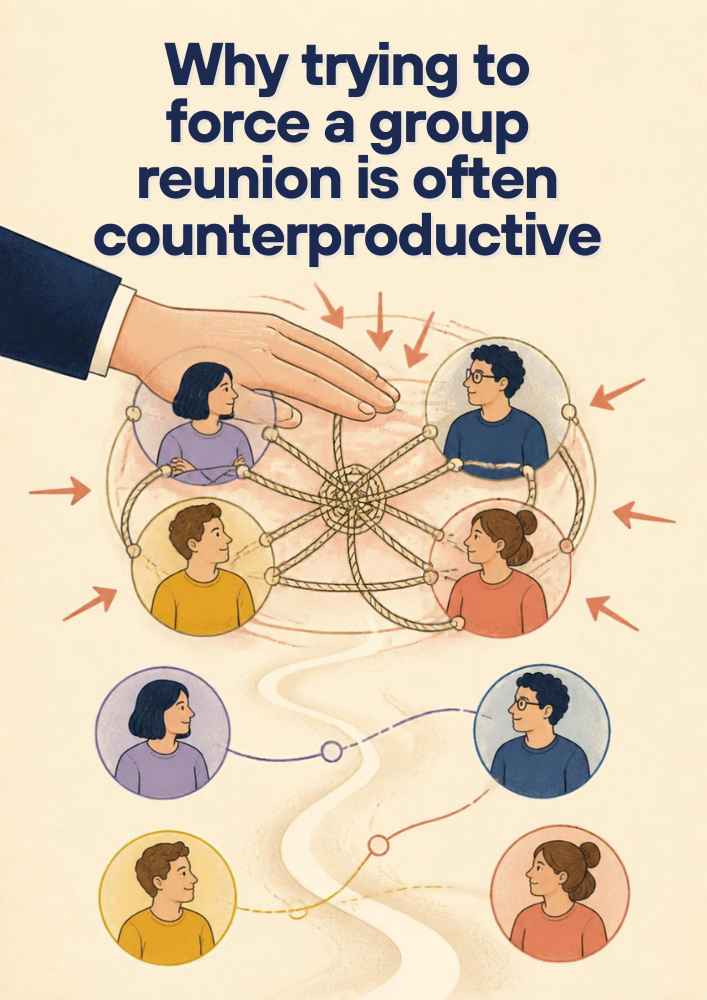
Why trying to force a group reunion is often counterproductive
A common instinct is to try to recreate the group dynamic: organizing a big get-together, reviving the group chat, or getting everyone back in the same room. Sometimes this works. However, it often just highlights how different everyone's lives have become and can leave people feeling that the attempt to recapture something made its absence more not less evident.
This doesn't mean group gatherings are meaningless now. It means they likely work best as occasional, low-pressure events, rather than something forced back into being the regular norm.
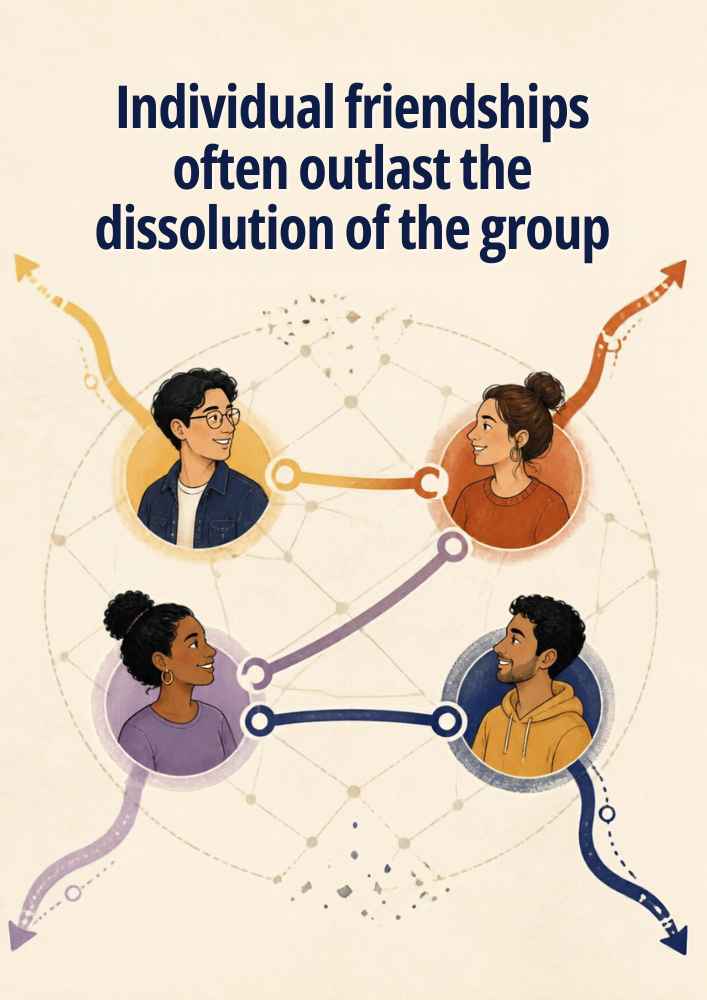
What really helps
Allow individual friendships to be enough, provided they are genuinely good ones. You don't need the full group dynamic to remain active for each friendship to hold value. A group of friends that branches out into close individual friendships is still a group of friends that worked; it simply no longer takes its original form.

Keep the group chat alive without placing excessive demands on it. It doesn't need to be active every day to remain meaningful. Exchanging occasional messages or sharing something relevant from time to time keeps the bond alive without requiring the constant activity that used to exist.
Plan group gatherings as occasional events rather than a return to normal. Viewing a reunion as a pleasant, sporadic occasion tends to foster better feelings than treating it as proof that the group dynamic has "returned," as the latter approach sets the stage for disappointment if the experience doesn't feel exactly the same as before.
Allow yourself to grieve the group's former identity without assigning blame. It is okay to miss what the group used to be without needing to find a reason for the change or someone to hold responsible. It is natural for groups to evolve as people's lives take different paths; it is not a sign that something has gone wrong.
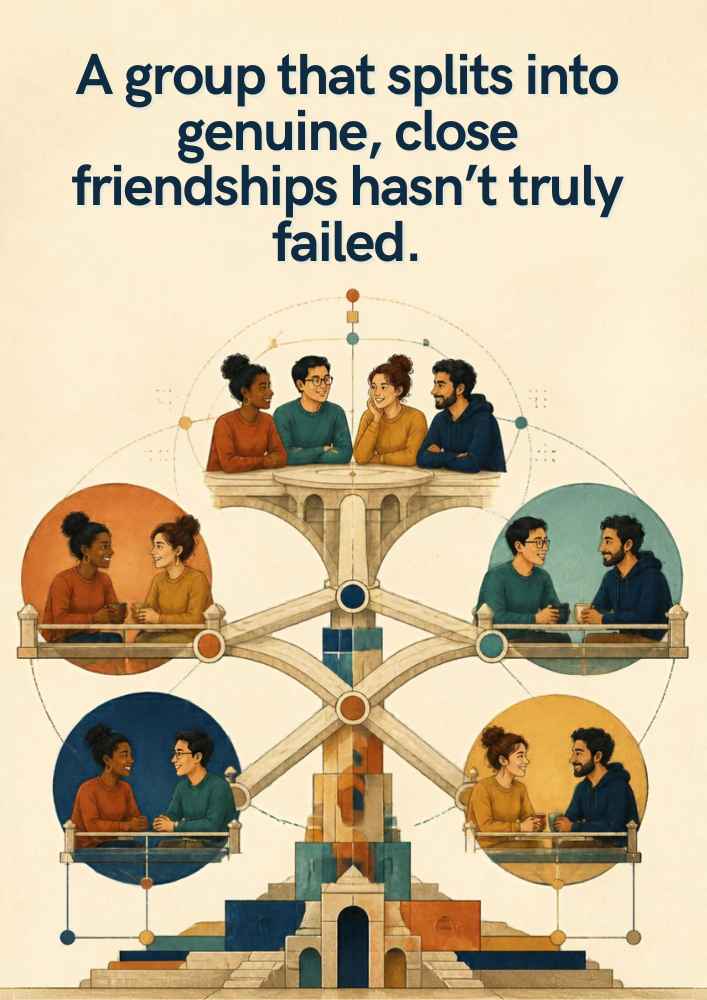
A group that splits into genuine, close friendships hasn't truly failed.
If your friend group quietly evolved into several separate, close friendships rather than remaining a single unit, it isn't a story about the end of a friendship, but rather about how it shifted shape to better suit everyone's real lives something the original version could no longer offer. The group chat falling silent doesn't erase what was built; it simply means that what was created now endures across multiple individual spaces instead of just one.