

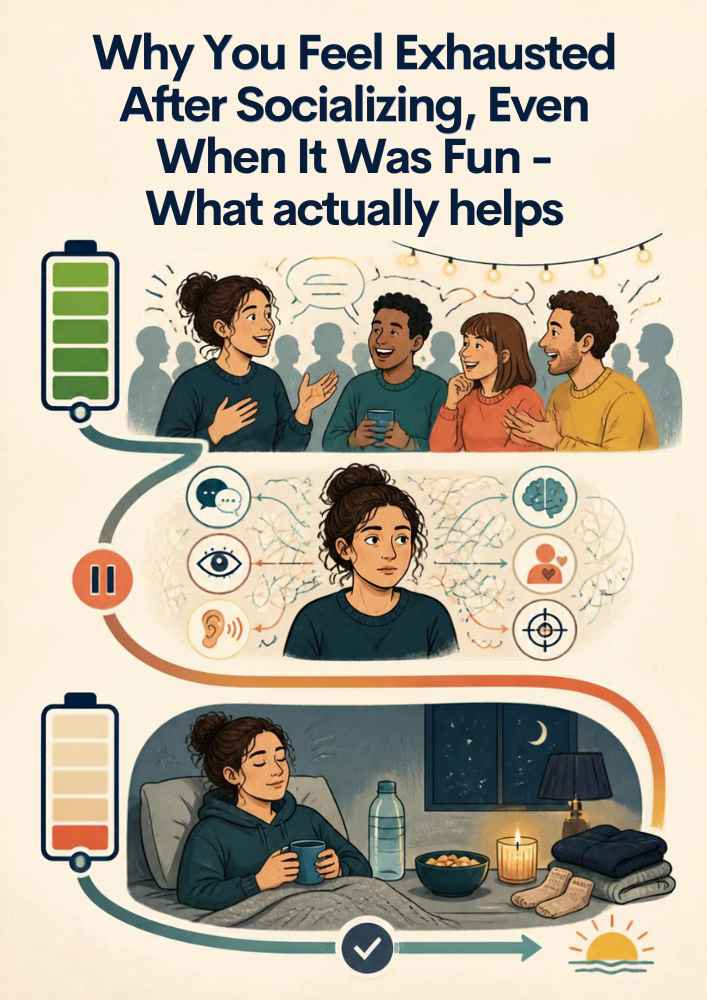
You had a great time. The conversation flowed naturally, you laughed more than you expected, and you didn't check your watch even once. Then you got home, and something shifted. Your energy plummeted, and the next morning, you felt as though you had run a marathon. It’s a confusing sensation, because nothing that happened that night was bad. So why does your body react as if it were?
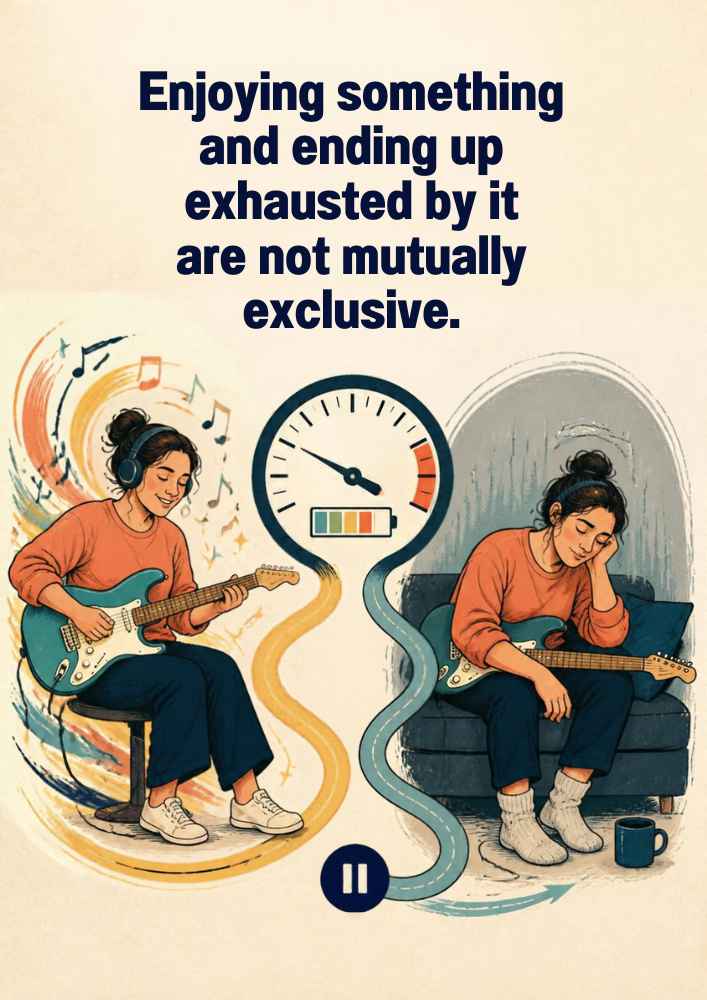
Enjoying something and ending up exhausted by it are not mutually exclusive.
This is where most people get confused. We tend to assume that if something drains us, it’s because we didn't enjoy it, and that if we did enjoy it, it shouldn't wear us out. However, enjoyment and energy expenditure are two completely different things. You can thoroughly enjoy a dinner with friends and still invest a considerable amount of energy in it just as you might love a long hike but end up exhausted by the time it’s over.
Socializing requires effort, even when it feels effortless. You are interpreting facial expressions, adjusting your tone of voice, following the thread of the conversation, and deciding when to speak and when to listen all at the same time. Your brain is doing a vast amount of silent work in the background, and that effort adds up, regardless of whether or not you are having fun.
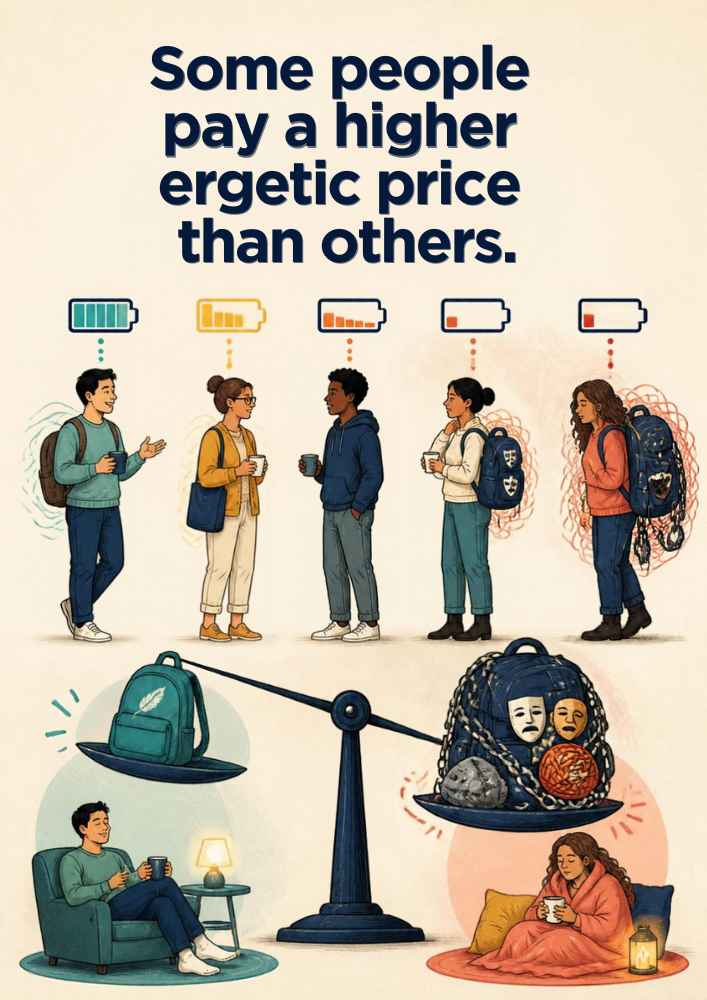

Some people pay a higher energetic price than others.
Everyone has a different limit regarding the amount of stimulation they can process before reaching their capacity. For some, spending a few hours surrounded by people provides a pleasant energy boost. For others, those same hours deplete a significant portion of their reserves, even if they are in a room full of people they adore. Neither way is better than the other, nor does it indicate how much you value your friends.
This is often what people mean when they describe themselves as introverts, though the label matters less than the behavioral pattern. What matters is paying attention to how you actually feel afterward, rather than how you think you *should* feel.
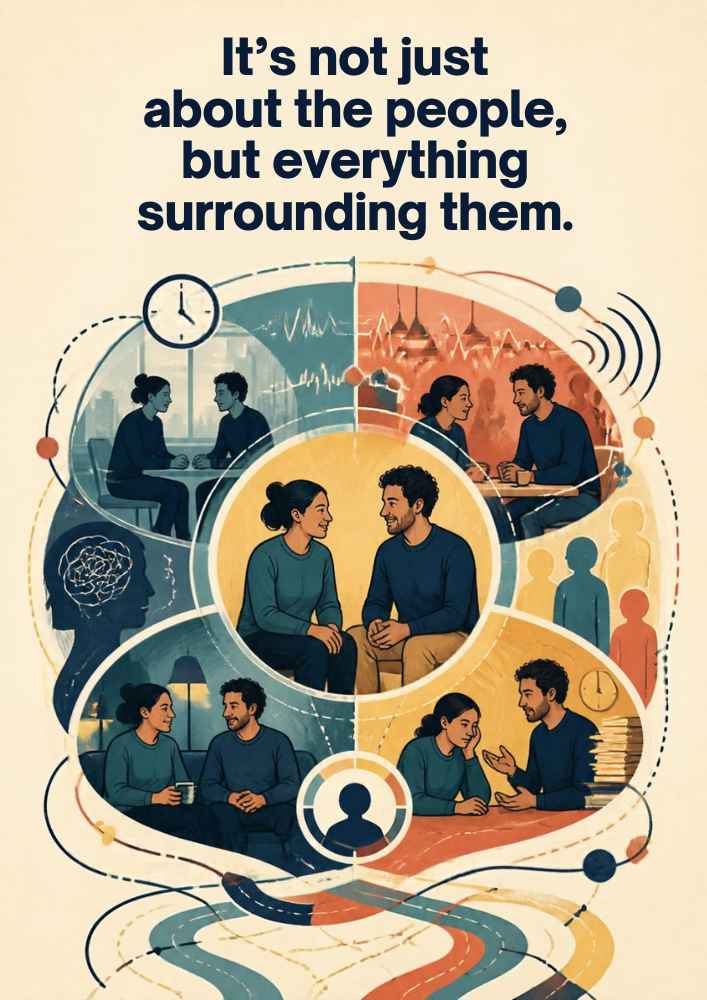
It’s not just about the people, but everything surrounding them.
A social event isn't limited to conversation alone. It involves noise, lighting, movement, music, small decisions about where to stand or sit, and the constant, underlying awareness of being surrounded by a crowd. Even a quiet dinner involves more sensory input than a typical evening at home.
So, when you feel drained, it might not be because of the company at all. It could simply be the sheer amount of information your brain has had to process; that’s why the same people might feel energizing during a quiet one-on-one meeting but exhausting in a noisy group setting.

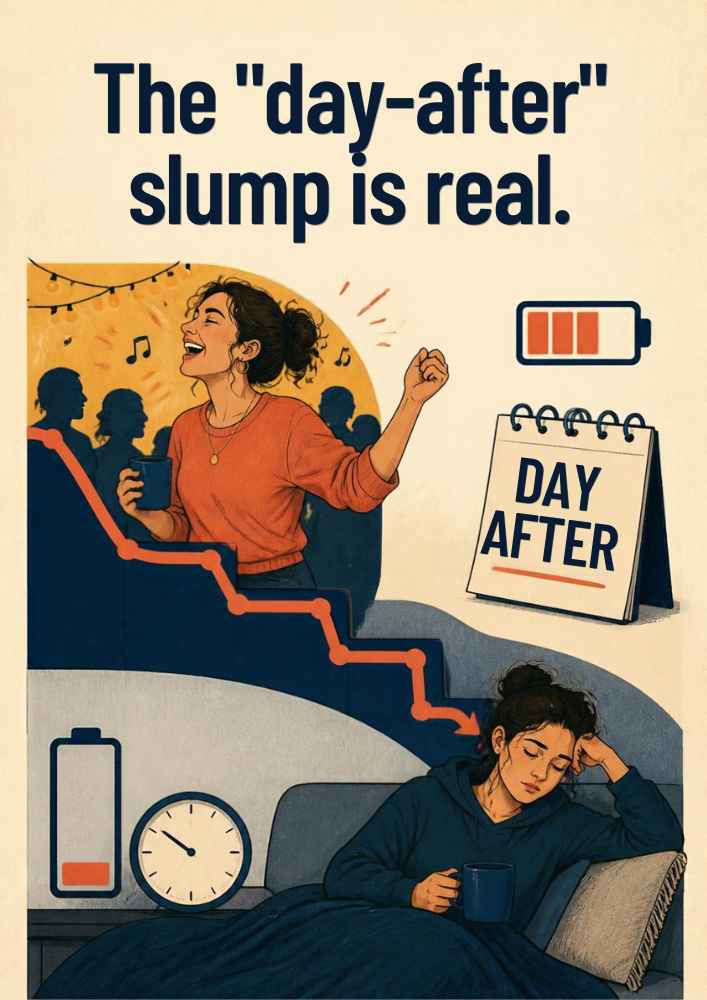
The "day-after" slump is real.
Many people notice that the fatigue doesn't hit during the event itself, but later—sometimes not until the next day. This delay happens because, during the event, you’re running on adrenaline and the momentum of the moment; the bill only comes due once things quiet down.
If you’ve ever felt strangely low or apathetic the day after a big night out, this is likely the reason. It’s not regret, nor is it a sign that you shouldn't have gone; it’s simply the recovery process.
 .
Plan your recovery just as you plan the event. If you know a socially busy day is coming up, keep the following day relatively free. Viewing recovery as part of the plan rather than an unwelcome surprise eliminates much of the guilt.
Build in some quiet time before and after. An hour of calm before heading out and another upon returning home can make a surprising difference. Not everything has to happen back-to-back.
Leave early without apologizing for it. You have the right to leave while you’re still having fun. Ending the night on a high note, rather than forcing yourself to push past your limits, often means you’ll actually have energy left for next time.
Observe which situations take the most out of you. Perhaps noisy groups drain you, but having a coffee alone doesn’t. Maybe long events leave you exhausted, while shorter ones suit you well. Understanding your own patterns allows you to embrace what works for you and adjust the rest, instead of simply trying to tough it out at all costs.
Stop interpreting your fatigue as a final verdict. Feeling drained after having a good time doesn’t mean you’re antisocial, that you didn’t truly enjoy yourself, or that something is wrong with you. It simply means the event consumed energy and you now need to replenish it.
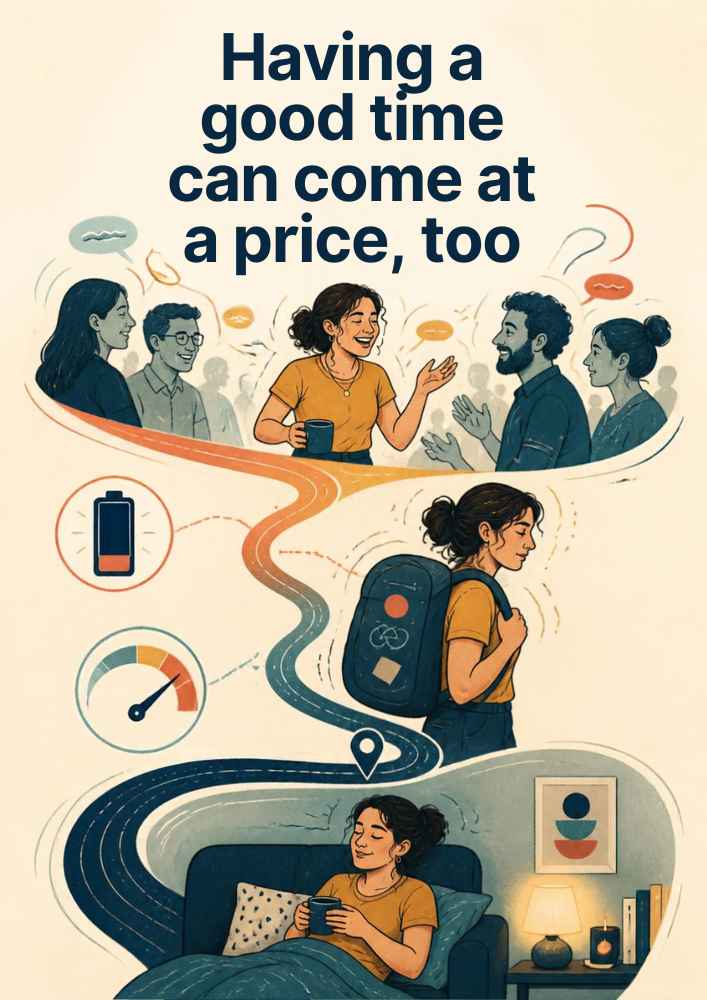
Needing to recharge after being around people isn't a flaw you need to fix; it’s information about your own nature. Once you stop viewing that exhaustion as a sign that something went wrong, it becomes much easier to plan your activities and enjoy the good moments without fearing the inevitable slump that follows.