

Someone asks where you want to eat, and what should be a thirty-second answer turns into five minutes of genuine deliberation. It’s not that you lack preferences; it’s just that every option seems to come with its own invisible list of pros and cons that your brain insists on analyzing before committing to anything. You can call it indecision if you like, but that label doesn't capture what’s actually going on.
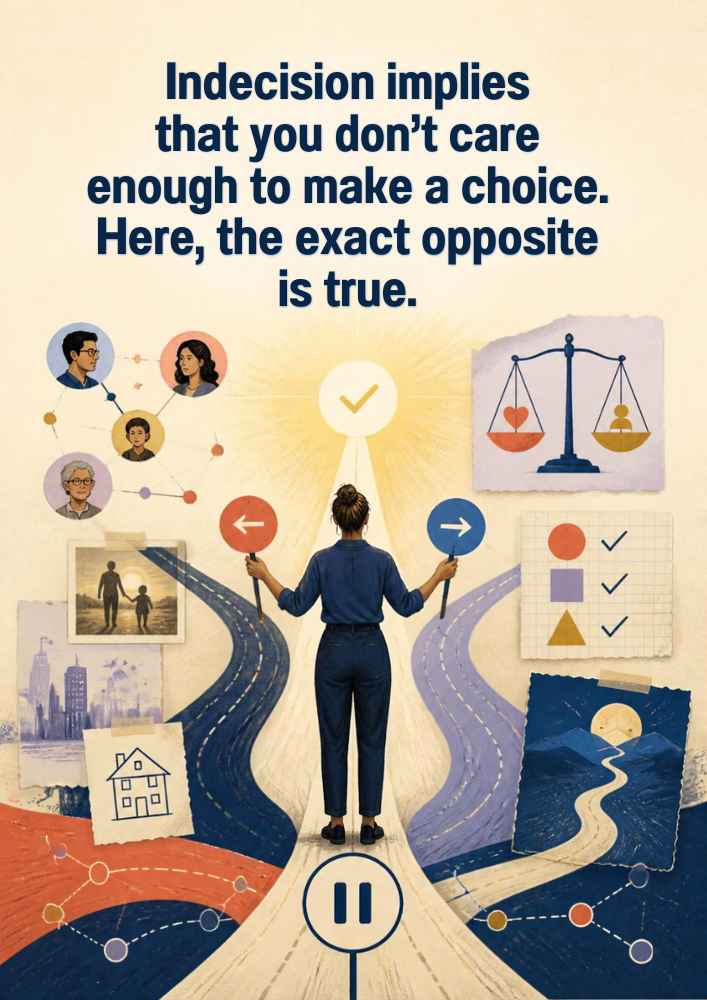
Indecision implies that you don’t care enough to make a choice. Here, the exact opposite is true.
The word "indecisive" suggests someone who can't be bothered to reach a conclusion. But if you’ve ever struggled to pick a restaurant, you know that’s not true at all: you care a great deal perhaps too much. What’s really happening is that your brain refuses to commit until it’s certain it has made the right choice a problem very different from a lack of interest.
This distinction matters because telling someone to "just make a decision" isn't helpful for someone deliberating out of genuine concern or interest; it might work for someone acting out of apathy, but the two situations require completely different solutions.


Why small decisions sometimes seem harder than big ones
It may seem counterintuitive, but small decisions can be harder than big ones precisely because, in theory, they shouldn't require so much analysis. A major decision like which city to move to comes with implicit permission to deliberate seriously. A minor decision like which restaurant to choose doesn't carry that same permission; consequently, when it still demands considerable mental effort, you might start to think something is wrong with you, rather than seeing it simply as an accurate reflection of how your brain processes choices.
Your brain doesn't automatically adjust its level of effort based on the perceived "importance" of a decision. If your way of thinking tends to involve carefully weighing options, that tendency manifests in small decisions too, even if it seems disproportionate. The underlying fear isn't the decision itself, but the regret.
Much of the paralysis surrounding decision-making stems not from the options themselves, but from the anticipated feeling of having made the wrong choice. If you pick a restaurant and it turns out to be mediocre, a part of you will keep dwelling on the idea that you could have chosen something else. Avoiding the decision even temporarily creates the illusion of postponing that risk, when in reality, it merely delays the choice and adds stress.
That is why people who struggle with small decisions aren't necessarily bad at making them (once they actually decide, things usually go fine); their specific issue is the anticipation of regret a mental process distinct from the act of choosing itself.
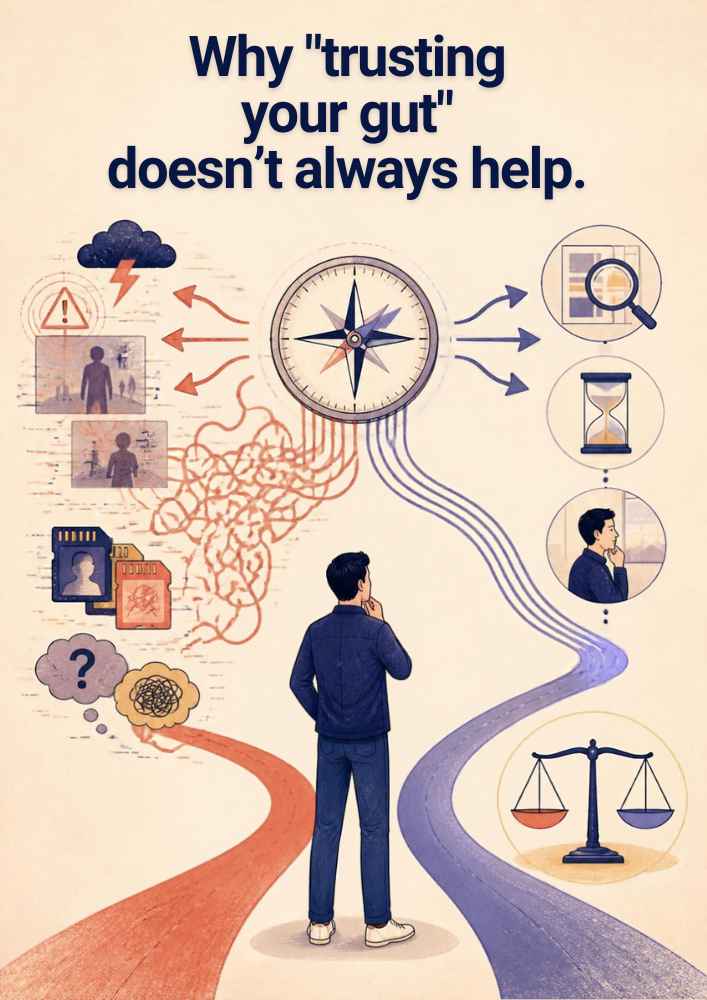

Why "trusting your gut" doesn't always help.
This advice assumes your gut is already sending a clear, unequivocal signal that you are simply ignoring by overthinking the matter. However, for many people, the real problem is the absence of a clear, obvious instinctive preference; several options may seem equally good, making the advice to "trust your gut" frustrating and useless when no clear answer has emerged.
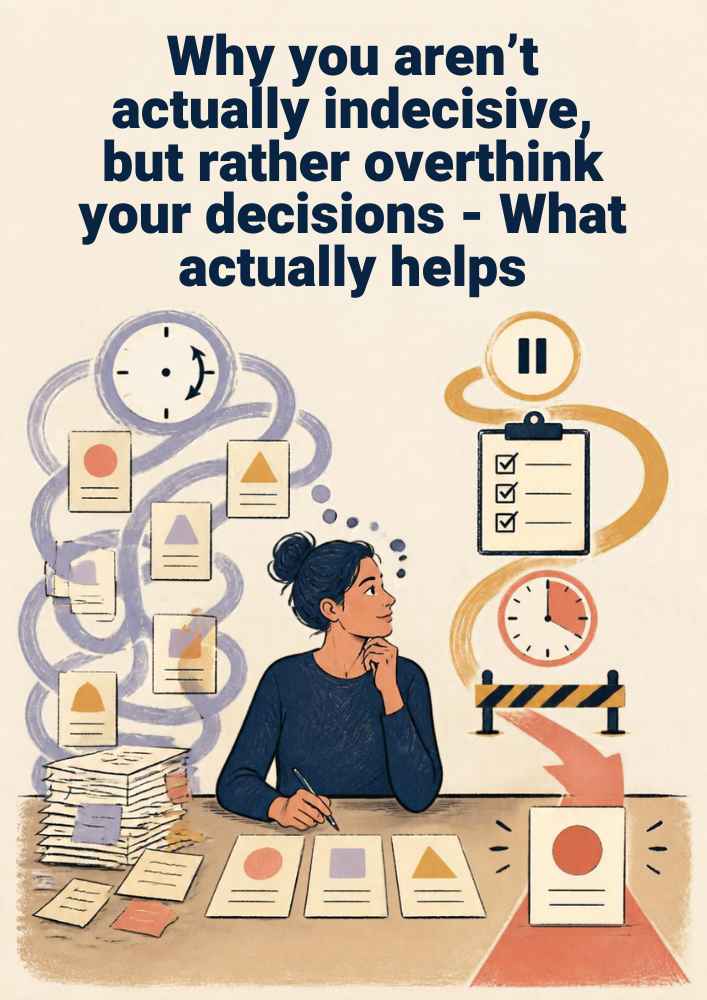
What actually helps.
Set a specific time limit before you start making the decision. Give yourself sixty seconds for a small decision and ten minutes for a medium-sized one. A clear limit nips the cycle of endless deliberation which makes small decisions feel like they take forever in the bud.
Ask yourself, "Will I regret this in five minutes?" instead of "Is this the best option?" Lowering the bar from "optimal" to "acceptable and regret-free" eliminates much of the pressure that causes the paralysis in the first place.
Let a coin toss reveal your true preference. If two options seem truly equivalent, flip a coin not to decide at random, but to observe your gut reaction to the outcome. If you feel relief, that is your answer. If you feel disappointment, that is also your answer; the coin simply served to bring it to light.

Remember that most small decisions aren't permanent. Choosing a mediocre restaurant means just one meal, not a verdict on your judgment. Downplaying the perceived consequences of a decision often speeds up the process more than any decision-making technique.
Practice making quick decisions in low-stakes situations. Deliberately and quickly choosing things that don't really matter which series to watch or which route to take on a walk builds a sort of "decision-making muscle" that can carry over, however slightly, to more important decisions.

The fact that you care isn't the problem.
Taking time to decide is not a flaw; it is a natural consequence of genuinely caring about the outcome both for yourself and, often, for the person with whom you are making the decision. The goal is not to stop caring, but to avoid letting that concern spill over into giving equal weight to every decision; it is about reserving deep reflection for the choices that truly warrant it and allowing small matters to remain small.